
A Lasting Fix for the Bulge in Your Groin
An inguinal hernia will not heal on its own, and it tends to grow over time. At our Santa Monica and Encino offices, Dr. Matthew Lublin repairs groin hernias with tension-free mesh techniques performed laparoscopically or with robotic assistance, using small incisions designed to help you return to work, exercise and daily life with confidence.
Request an AppointmentWhat Is an Inguinal Hernia?
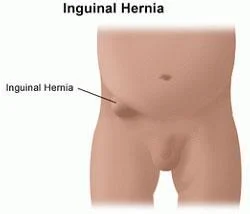
Inguinal, or groin, hernias are the most common type of hernia in adults. They occur more often in men but can also develop in women. With an inguinal hernia, tissue from inside the abdomen, most often the small intestine or the omentum (a layer of fat that lines the abdominal cavity), pushes through a hole or weak spot in the abdominal wall and creates a visible lump or bulge in the groin.
That weak spot forms in the fascia, a strong sheet of connective tissue that runs from the top of the abdomen, where it meets the chest, down past the groin into the leg. The fascia is the strength layer of the abdominal wall and is responsible for keeping the abdominal contents in place. Over time, wear and tear can erode the fascia, much like the outer layer of a tire wears thin until a bulge forms. A hernia is, quite literally, a hole in the fascia. You can learn how other hernias compare on our types of hernias page.
Common Signs of a Groin Hernia
Inguinal hernias can occur on one side of the body or on both sides, which is called a bilateral inguinal hernia. Common signs include:
- A bulge in the groin that is often painless at first
- A bulge that becomes more noticeable when you exercise, cough, strain or stand
- A bulge that shrinks or disappears when you lie down
- Aching, pressure or discomfort in the groin, and less often, pain
The size of a hernia does not reliably predict how it will feel. Small hernias are just as likely to cause pain and discomfort as large ones, and groin hernias generally get larger over time.
When a Hernia Becomes an Emergency
More serious problems can develop if a hernia becomes incarcerated, meaning the tissue becomes trapped and cannot be pushed back in, or strangulated, meaning its blood supply is cut off. A hernia bulge that becomes firm, tender or discolored, especially with nausea, vomiting or severe pain, needs immediate medical attention.
Inguinal Hernia Treatment Options
Most hernias should be repaired, but not every hernia needs surgery right away. Many are discovered during a routine physical exam. Once a hernia is diagnosed, however, it will not resolve on its own, because the fascia cannot regrow or replace itself. Dr. Lublin evaluates every patient individually to determine whether and when surgery makes sense. The main options are:
- Watchful waiting. If your hernia is small, causes no symptoms and you prefer not to have surgery, you may be able to live with it for now. If symptoms begin later, surgery can be performed at that point.
- A truss or hernia belt. A belt worn over the hernia is meant to keep the abdominal contents from pushing through the opening. In practice it rarely controls the hernia well and is usually an ineffective long-term solution.
- Surgical repair. Surgery is almost always needed to fix a hernia. Hernias do not go away with time, diet or exercise.
Tension-Free Mesh Repair: Laparoscopic, Robotic or Open
The safest, most effective way to repair an inguinal hernia is with mesh placed in a tension-free fashion, which reinforces the weakened fascia without pulling the surrounding tissue tight. Dr. Lublin performs this repair laparoscopically through small incisions or with the assistance of a surgical robot, and an open approach is available when it is the better choice for a particular patient. Minimally invasive repair is especially useful for hernias on both sides, since both can be fixed through the same small incisions. To see how these techniques compare, visit our robotic vs. laparoscopy vs. open surgery page.
Hernia repair is the most frequently performed operation by general surgeons around the world. More than 1 million hernia repairs are performed in the United States each year, and more than 20 million are performed worldwide.
Care Close to Home in Santa Monica and Encino
Dr. Lublin sees patients at two offices, on Santa Monica Boulevard in Santa Monica and on Ventura Boulevard in Encino, making it convenient for patients across the Westside and the San Fernando Valley to be evaluated, plan surgery and attend follow-up visits.
Questions About Groin Hernia Repair
Will an inguinal hernia go away on its own?
No. An inguinal hernia is a hole in the fascia of the abdominal wall, and fascia cannot regrow or repair itself. Diet, exercise and hernia belts cannot close the opening, and most groin hernias slowly get larger over time.
Do I need surgery right away?
Not always. If your hernia is small and causes no symptoms, watchful waiting may be reasonable. Dr. Lublin evaluates each patient individually, and surgery can be scheduled if the hernia begins to cause discomfort or grows.
Can women get inguinal hernias?
Yes. Inguinal hernias are more common in men, but women can develop them as well. Any new bulge or discomfort in the groin is worth having evaluated.
Why is mesh used in hernia repair?
Mesh reinforces the weakened fascia so the repair does not rely on stitching tissue together under tension. A tension-free mesh repair is considered the safest and most effective way to fix an inguinal hernia.
What is the difference between laparoscopic and robotic hernia repair?
Both use small incisions and a camera to repair the hernia from inside the abdomen. Robotic repair adds a surgical robot that gives the surgeon enhanced visualization and precise instrument control. Dr. Lublin will recommend the approach that best fits your hernia and health history.
Can hernias on both sides be repaired at the same time?
Yes. Bilateral inguinal hernias can often be repaired during the same operation, and minimally invasive techniques allow both sides to be fixed through the same small incisions.
When should I seek emergency care for a hernia?
Seek immediate care if your hernia becomes firm, tender or discolored, cannot be pushed back in, or is accompanied by severe pain, nausea or vomiting. These can be signs of an incarcerated or strangulated hernia.